Sepetiniz Boş
Our Farmers
DABOV Specialty Coffee ailesinin çiftçileri
Kahve avcımız Jordan Dabov’un sizin için özenle seçtiği kahveler, yaşadıkları bölgelerde sürdürülebilir kalkınma için çalışan üreticilerden gelir. Çoğu, kendi ülkelerinin en iyi çiftçileri arasındadır. Kahveyi severler. Kahveyle yaşarlar.
Onların dünyası, herhangi bir üretimle hızlı, kolay ve garantili kâr elde etme dünyası değildir. Yeşil kahveyi altın hazineleri gibi görürler. Bu hazine sayesinde, dikimden hasada ve hasat sonrası işleme aşamasına kadar tüm adımları titizlikle ve sistemli biçimde yöneterek, dünya üretiminin yalnızca %5’ini oluşturan özel kahveleri üretirler.
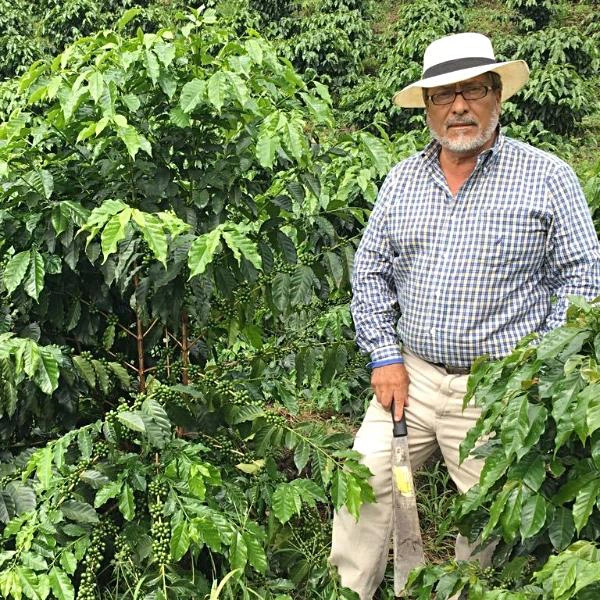
Osvaldo Perez Ramirez from Guatemala
The farm was created by Osvaldo Pérez and his brothers in 1940, starting with the cultivation of coffee on an area of 5.6 hectares of land. Years later, Osvaldo Pérez Ramírez took over the family business. Gradually, he began to apply new and improved techniques in the cultivation of coffee plantations, which led to higher yields. He began to work on new varieties such as Catimor, Catuai and Pacamara. Gradually, the business grew and to date the farm has reached an area of 105 hectares of coffee and 35 hectares of virgin rainforest.
Ramon Tangarife from Colombia
Ramon Alfredo Pressiga Tangarife is a professional agronomist, holding the Q Grader certificate, which defines him as an expert in coffee grading. The coffee is grown on the El Indio farm, Colombia and is surrounded by protected areas that provide a great wealth of natural resources and diverse flora and fauna - unique flavors that can be felt.
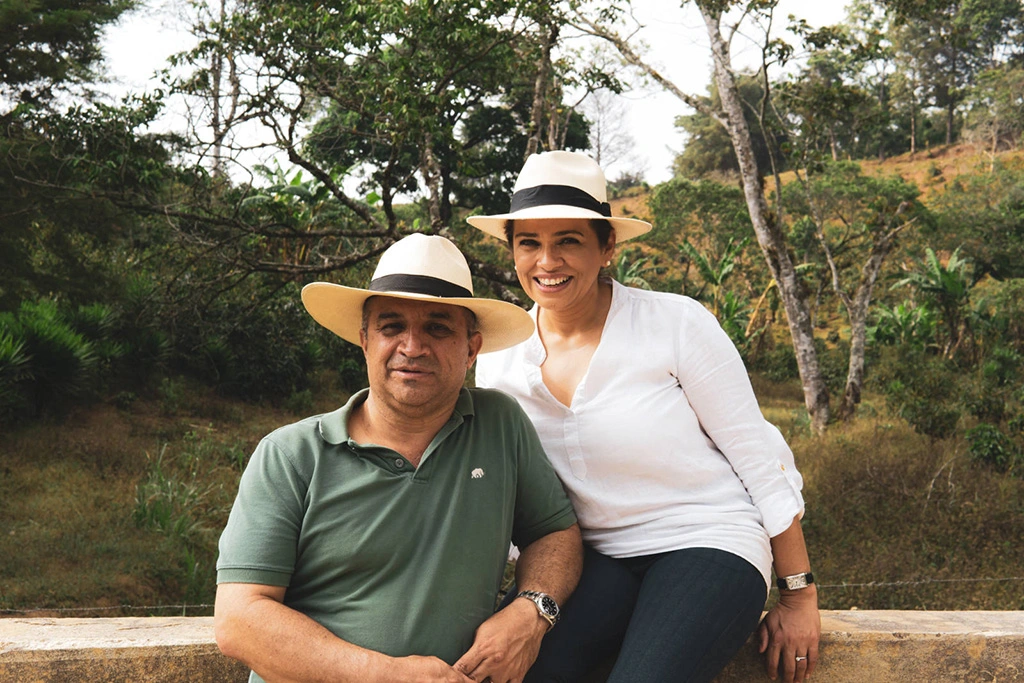
Marisabel Caballero from Honduras
Marisabel Caballero is a hereditary farmer and owner of the Finca El Puente specialty coffee farm in Honduras with her husband Moises Herrera. In 2016, the two won #1 in the Cup of Excellence competition in Honduras. Dabov Specialty Coffee is one of the few roasters worldwide that Marisabel and Moises entrust with their coffees.
Learn more about Marisabel Caballero on our special page about her here !
Our goal is to show you the love and dedication that Marisabel and Moises put behind this coffee. Pamper your senses with their unique aromatic coffees.
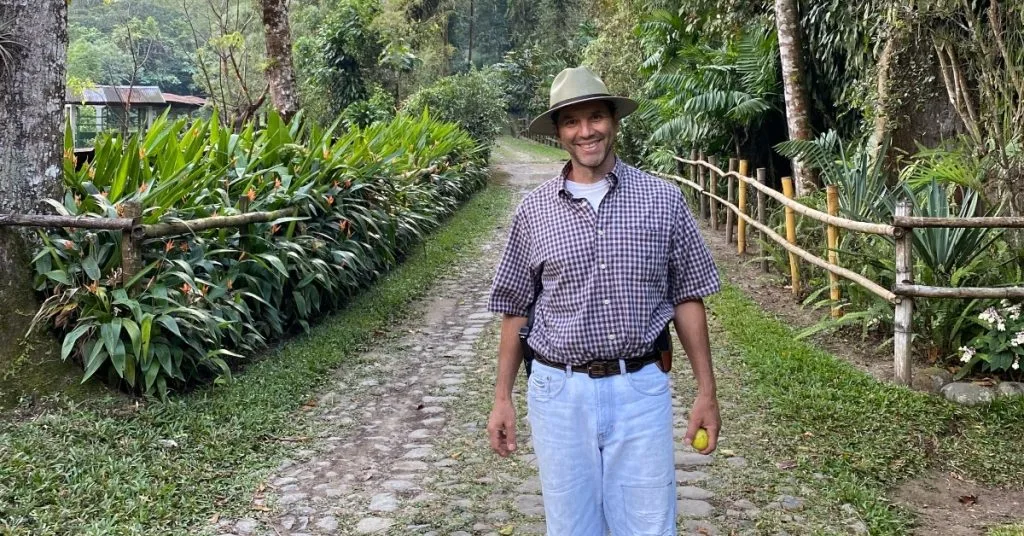
Dariush Echeverria from Guatemala
Darius is a fifth generation coffee farmer. The Santa Rita farm was founded in the 1870s by Darius’ great-great-great-grandfather and today prides itself on its specialty coffee with multiple international organic and environmental certifications.
Try Guatemala San Miguel Coffee – Bio for a balanced and delicious experience. Having won multiple international organic certifications, this coffee stands out for its organic taste.
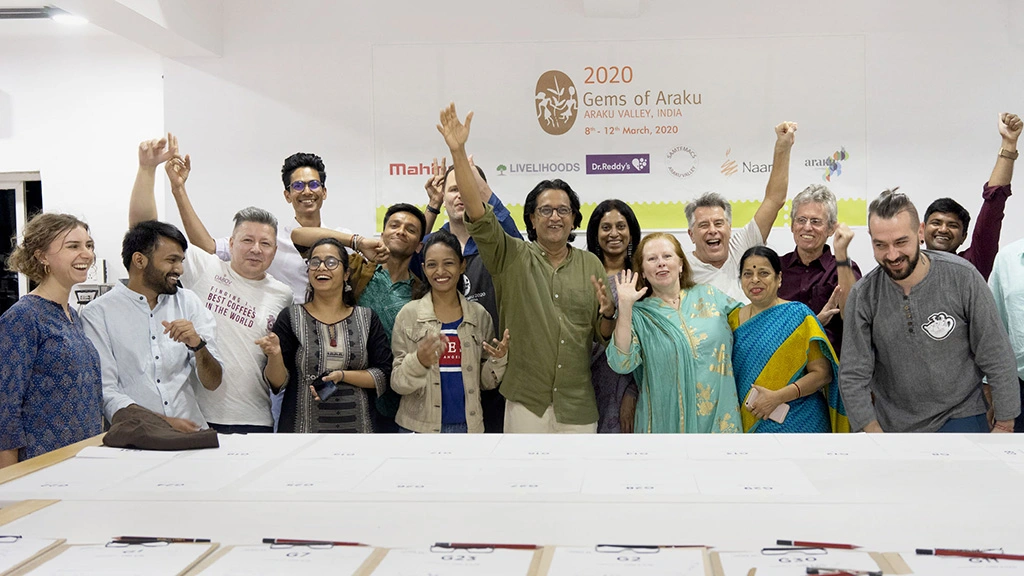
The farmers of Gems of Araku in India
The Small Farmer Organic Cooperative Society (SAMTFMACS) in Araku Valley, India, now has 10,500 farmers. The producers of the best coffees from them participate in the Gems of Araku specialty coffee competition. We have been offering coffees from it since 2020.
Renato Ishikawa from Brazil
Renato Ishikawa is the son of Japanese immigrants to Brazil. After purchasing the Fazenda Alianza farm in 1996, Ishikawa transformed it into a unique place to grow specialty coffee in the Mojiana region of São Paulo state.

Gabriela Huec from Nicaragua
Gabriela Huec is the main driving force behind Finca La Virgen, winner of 6th place in the Cup Of Excellence Nicaragua 2018.
For years, the farm has not only produced some of the best coffee in Nicaragua, following the sustainable development model, but also takes care of the local community by providing homes for its permanent workers, equal pay for men and women, and free healthcare and education for the entire family.
Enrique Cambrai from Brazil
Enrique Diaz Cambraia is the owner of Fazenda Samambaia and a representative of the fourth generation of the Cambraia family, long-time producers of specialty coffee.
Enrique's coffee has repeatedly won awards in the international Cup of Excellence competition - the most important competition in the world of specialty coffee, the awards of which are a huge reward for the work of every farmer. Thanks to his work and the passion of his entire team, Fazenda Samambaia managed to rank in the top places for two whole years (2000 and 2001), and also in 2014.
Experience a unique experience with one of the best coffees in Brazil - Brazil Samambaia coffee and enjoy its sweet taste.

Ernesto Perez Orea from Mexico
Ernesto's family has a long history that goes hand in hand with the history of Mexican coffee. Together with his sister, Givet, Ernesto acquired Finca Fatima in the 1970s. After his education in the United States, Ernesto returned to Veracruz to run the family specialty coffee farm. In 2019, Finca Fatima managed to place in the top 10 of the Cup of Excellence competition in Mexico.
Mario Alberto Aco Gomez
Farmer Mario Alberto Aco Gomez and his father take care of their farm Finca Apipias with great love and patience. They maintain the family tradition of three generations of coffee farmers. In 2022, their coffee won 25th place in the Cup of Excellence competition.

Otaya Farmers' Association in Kenya
Nestled in the foothills of Mount Kenya, Otaya Farmers' Association is one of the largest certified specialty coffee farms in Kenya.
Rachel Samuel from Ethiopia
Rachel Samuel was born in Ethiopia. The coffee industry became her personal mission when she returned to her homeland in 2007 to film a documentary about Ethiopian specialty coffee. Rachel, along with her husband Adam, began searching for land to start their specialty coffee growing venture.
Johan Gutierrez Falla from Colombia
Johan Gutiérrez Falla is a fifth generation coffee farmer. On his Monteverde farm, he works with his entire family, including four generations of farmers passing on their knowledge to each other.
Keeping up with the times, Johan combines the knowledge of his elders with the advantages of modern technology. Everything he has learned over the years now allows him to participate in various prestigious specialty coffee competitions, including the Cup of Excellence.
Johan Gutiérrez Falla’s family says that one of their greatest prides is the first time they were selected as a finalist for the Cup of Excellence, getting the opportunity to participate in the auction. The coffee on the Monteverde farm is processed “honey” and the variety is “Geisha”.
Leykun Zegeye from Ethiopia
Karamo Coffee is one of DABOV Specialty Coffee's established partners in the homeland of coffee - Ethiopia. The company has been on the market since 2017, and its founder is the entrepreneur and passionate lover of specialty coffee Niguse Gemeda Mude. Karamo Coffee's coffees are grown at an altitude of 2380 meters in the Sidama region in southern Ethiopia. Karamo's big breakthrough came in 2020, when the company won the Cup of Excellence with an impressive asset of 91.04 points.

Jose Argueyo Enriquez
José Argueyo Enriquez and his family run the Finca Santa Cruz farm next to the famous Triunfo Biosphere Reserve. They are proud of their specialty coffee production methodology, based on the creation of protocols - for selective cutting, fermentation, storage, etc. The processes are repeated every year, which helps to ensure consistency in the quality of the resulting product.
José Argueyo Enriquez is the youngest member of the family, but on the other hand, he already has a big one himself - he is happily married and has three children. One of the causes in his life is to prove that top-quality specialty coffee can also be produced in his native Mexico. And that his country can compete with the best on the planet. And the first places of his “Geisha” at the Cup of Excellence in several consecutive years is proof of this.
At Finca Santa Cruz, they believe that the quality of the product is not a matter of luck, but of methodology and compliance with established protocols. The processing method is "natural", and the coffee is grown at an altitude of 1700 meters.
Ingrid Alejandra Hernandez Lopez
Ingrid Alejandra Hernandez Lopez is the lady who runs the Mexican specialty coffee farm La Nena. The production process takes place in mountainous areas with volcanic soil, which in turn contributes to the more specific taste of the coffee. The altitude is 1100 meters, and the coffee processing method is “washing”.
Ingrid herself says that her love for specialty coffee started 20 years ago when she accidentally visited one of the farms in Mexico, falling in love with the view and the entire process of growing the produce. She calls her farm “her child”, taking the best care of it day after day.

Edilberto Bermeo
The El Pino farm is managed by Edilberto Bermeo and his family. The production has an area of over 1.00 hectares, where the “Geisha” coffee variety is grown. The good taste of the coffee is contributed by the good conditions for its cultivation - altitude, diversity of the microclimate, rich soil, etc.
The production of the El Pino farm started in 2018 under a system of contour curves. In 2020, the first beans began to appear, and in 2021 the farm produced 1 ton of parchment coffee of the “Geisha” variety for the first time. The coffee managed to win between 88 and 90 points at the Cup of Excellence, reaching the Top 30 in the largest specialty coffee competition on the planet.
In 2023, the El Pino farm increased its production volume, and to date it already has a harvest of over 2.5 tons of coffee.
The coffee at the E Pino farm is grown at an altitude of 1850 meters, and the processing method is “washed”.
Marcelo and Roberto Flanzer
The managing partners of the Ecoagricola farm are the brothers Marcelo and Roberto Flanzer. In the past, they ran the business side by side with their father Enrique, who at some point retired and withdrew from the business. Marcelo is responsible for the farm's production, while Roberto is actively involved in the administrative processes.
Ecoagricola's activity began in the 1970s, when the family purchased land in the Serra do Cabral region to engage in forestry projects. With the advent of the new millennium, the Flanzer family began to consider diversifying the business, and specialty coffee was chosen because of the excellent conditions for growing it in this region: good altitude, climate, water, terroir, etc.
Today, at Ecoagricola, specialty coffee is grown in the most sustainable way possible, thanks to modern technologies.
The family planted its first coffee in 2006, and three years later they harvested their first harvest. In 2014 and 2015, the farm was selected as “Sustainable Supplier of the Year”, and was also ranked among the finalists of the “Ernesto Illy” award. In 2016, Ecoagricola took an important step in its development, launching its own direct trade program. Relationships were established with key customers in Europe, North America and Oceania. Their coffees are used not only in blends, but are also offered as single origins.
The water used for irrigation and for wet-processed coffee comes from the farm’s own springs, being 100% pure and crystal clear. At Ecoagricola, coffee residues are used to produce its own organo-mineral compost.
Among Ecoagricola’s great successes are first places in the Cup of Excellence - the most prestigious specialty coffee competition in the world.
San Cristobal del Llano
Growing coffee is a family tradition for San Cristóbal del Llano farmer, who runs Don Danilo Farm in Costa Rica. 60 years ago, his grandfather planted his first coffee trees, and today his grandson continues his journey with dignity, together with his team.
The love for coffee has been passed down from generation to generation in the San Cristóbal family, and the farm is fully dedicated to the entire process of growing it - from preparing seedlings to drying coffee in the mill.
To improve its processes for producing specialty coffee, the San Cristóbal farm also opened its own micro-mill. The goal for everyone at Don Danilo remains the same - producing specialty coffee that will put Costa Rica on the world map.
Dr. Hamdan from Indonesia
Dr. Hamdan is the manager of the collective coffee plantation in the Gayo Mountains, in Pantan Musara village, Central Aceh. After the harvest, the processing of the coffee beans is supported by his son - Hendra Maulizar. Young Hendra processes each Gayo Avatara coffee bean with the Gegaring team using a natural anaerobic process after harvest. This process is different and rarely used. This causes the natural anaerobic process to form its own potential from this coffee bean. This procedure enriches Gayo Avatara with a fresh fruity aroma and an intense sweet taste.
Manuel Navarro, La Ortiga from Costa Rica
Costa Rica’s Finca El Cabuyal La Ortiga coffee is grown on a family farm located in La Ortiga de Copalchi in the Corralillo province of Costa Rica. Manuel Carranza Navarro and Maria De Los Angeles Molina Navarro received the 5-acre farm, called El Cabuyal, as a wedding gift from Maria’s father.
For the past ten years, the couple has worked together to produce specialty coffee on the farm, which features a micro-grinder that allows for meticulous care in cherry selection, pulp removal, fermentation, and drying of the coffee. The income from El Cabuyal helps the couple raise their two sons, who are 8 and 2 years old.
Café Exótico de Altura, Cooperativa de Caficultores de Antioquia, Colombia
The cooperative became Fairtrade certified in 2010, and in 2013 the farmers sold more than 776 tonnes of their coffee under Fairtrade conditions. These sales have generated significant amounts of Fairtrade Premium – more than €281,000 – the additional amount paid on top of the purchase price of the green coffee.
The Fairtrade Premium has allowed the cooperative to make significant investments in improving its community. However, this money also carries a huge responsibility, as the projects must reflect the wishes and meet the needs of more than 10,000 farm members and their families in more than 50 municipalities.
To improve the quality of the coffee of its participants, the cooperative uses the 'Train the Trainer' method to spread knowledge throughout the team. In addition, the association holds the "Cup of Antioquia" – a competition to recognize the best quality coffees. Seven laboratories and shelters have also been built in various municipalities for coffee drying.
Minot family, Blue Baron estate from Jamaica
Nestled in a gorge of tropical splendor and perched on a hillside between 600 and 900 meters above sea level, Blue Baron Estate has been producing the highest quality Jamaica Blue Mountain green coffee for many decades across its 67 acres.
Owned by the Minot family, who have been growing and processing coffee for over 68 years, Blue Baron’s trees are harvested up to 20 times during the harvest season, ensuring that only the ripest coffee cherries are picked, then pulverized and fermented with natural spring water.
Peaberry is a naturally occurring mutation of the common coffee cherry, producing only a single bean. These smaller, round beans are known for their sweetness and rich flavor.
Sergio Mantovanini, Fazenda Planalto from Brazil
Planalto Farm is a flatland oasis nestled in the rugged heart of Minas Gerais, Brazil. The farm covers 910 hectares of land at an altitude of 1,097 to 1,188 meters.
Nearly 300 hectares of coffee on Planalto Farm are fully mechanized, covering every aspect from planting to harvesting. Coffee varieties grown include Mundo Novo, Catuaí Red and Yellow Catuaí.
Coffee production from the field exceeds the national average with an average annual production of 14,000 bags. Planalto Farm has one of the most modern facilities in the country for processing and preparing high-quality coffee beans for export. Sergio Mantovanini and Cristiano Mantovanini are responsible for this farm.
Norberto Suarez, La Gloria Estate from Panama
Norberto Suarez is the definition of a “coffee boss.” He eats, breathes, and sleeps coffee (his house is literally the foundation of one of his farms). His passion is evident in every crop he harvests, and his knowledge of the land is undeniable.
Even in his late sixties, he effortlessly navigates his farms’ steep terrain and varied topography like a boss. His stature is so imposing that the decision to name his coffee Finca La Gloria El Jefe was a no-brainer, honoring his “boss status” and his dedication to crushing the crop every year.
Norberto brought a coffee growing system he learned in Brazil, meticulously planting each tree at the perfect distance from one another. And the result is seen in the perfect rows of beautiful coffee trees. The coffee varieties Typica, Caturra and Catuai reveal a characteristic taste that matches the region in which it is grown - bright and refreshing. Norberto is dedicated to the entire process of growing his coffee. He has taught his niece Nadeja dedication and together they have been producing phenomenal Panamanian coffee for years.
Christian from Indonesia
Christian's coffees, which have been awarded with participation in the prestigious Cup of Excellence competition, are grown on the Panangan Mata farm, located in the Takengon region of Indonesia. The location is extremely favorable for growing coffee, which is also helped by the altitude, reaching up to 1700 meters above sea level. This contributes to the slightly pronounced level of acidity of the coffees, which can boast a ranking in the Top 10 of the Cup of Excellence.
Clydesdale Estate - Jamaica
Jamaican Blue Mountain specialty coffee is popular with coffee lovers all over the world, and Clydesdale Estate is one of the companies responsible for it. Located in the beautiful Blue Mountains of Jamaica, the company unites the efforts of small farmers throughout the region to provide coffee known for its lack of bitterness, well-balanced body and intense aromas. Clydesdale Estate is the oldest company of its kind in Jamaica, operating since the 1970s.